Power and energy are closely related, but do they mean the same thing ?
NO
In engineering and energy management, confusing the two can lead to poor communication, incorrect comparisons and decisions based on incomplete information. For businesses managing generators, electrical distribution, solar systems or large facilities, the distinction matters.
What is power?
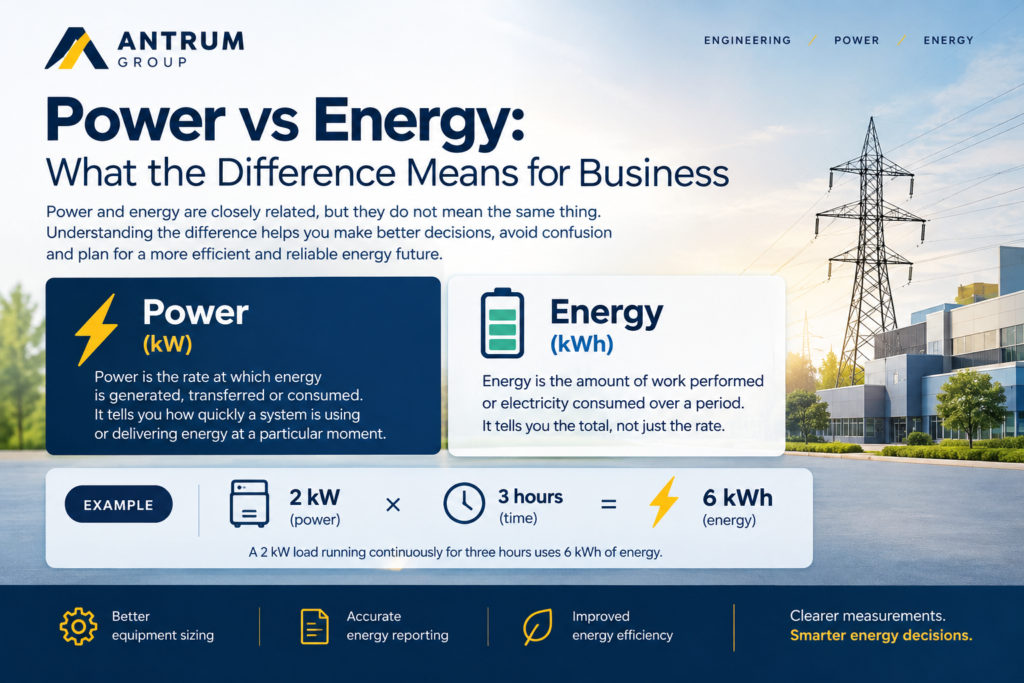
Power is the rate at which energy is generated, transferred or consumed. It tells you how quickly a system is using or delivering energy at a particular moment. Electrical power is commonly measured in watts (W) or kilowatts (kW). One kilowatt equals 1,000 watts.
What is energy?
Energy is the amount of work performed or electricity consumed over a period. Electrical energy is commonly measured in kilowatt-hours (kWh). A meter reading in kWh tells you how much electrical energy has been used, not simply how much power was being drawn at one instant.
A simple example
Imagine a 2 kW appliance operating at its rated power for three hours. If it draws 2 kW continuously, it uses 6 kWh of energy over those three hours. The power figure describes the rate; the energy figure describes the accumulated use. Actual consumption can vary if the appliance cycles or operates below its rated power.
Why the terms are misused
The words are sometimes used interchangeably in everyday conversation, quotations, reports and marketing material. People may describe a generator’s output in “units” without explaining whether they mean kW or kWh. A building may be described as using a certain amount of power per month, when the intended measurement is energy consumption. These shortcuts can obscure what is actually being compared.
Why the distinction matters to businesses
First, equipment sizing depends on more than monthly energy consumption. Engineers need to understand the connected load, demand profile, starting currents where relevant, power factor, operating conditions and required reserve. Second, energy bills and fuel costs depend on how much energy is consumed and how the system operates. Third, efficiency work requires reliable measurements so that changes in demand, operating hours and consumption are not confused.
Power, energy and demand are different questions
Power asks: how much is being used right now? Energy asks: how much was used over the period? Demand asks: what level of power did the site draw over a defined interval, often for billing or system-planning purposes? The exact definition of demand depends on the meter, tariff and measurement interval.
How to communicate more accurately
When discussing a system, state the unit and time basis. Use kW or MW for power, and kWh or MWh for energy. When presenting a monthly figure, label it as energy consumed during that month. When discussing a generator or inverter, distinguish rated output from energy delivered over time. Where demand charges apply, identify the relevant demand measure and interval.
The Antrum perspective
Reliable energy decisions start with a clear understanding of the system being measured. Engineering design, managed power operations and energy-efficiency planning all benefit from accurate terminology, good data and an understanding of how a facility actually operates. Antrum Group brings these areas together through its engineering, power and energy divisions.
Conclusion
Power and energy are related, but they answer different questions. Power measures the rate of use or transfer; energy measures the total accumulated use over time. Using the correct term is a small discipline that can improve technical conversations, reporting and planning. When in doubt, state the unit, the time period and exactly what was measured.